
Creator Guide
Create an AI Character Built for Better Stories
The best creator work does not start with twenty adjectives. It starts with function, motive, behaviour, and a voice that already sounds like someone.
Start with Character FunctionDefine MotivationBuild Personality Through Behaviour
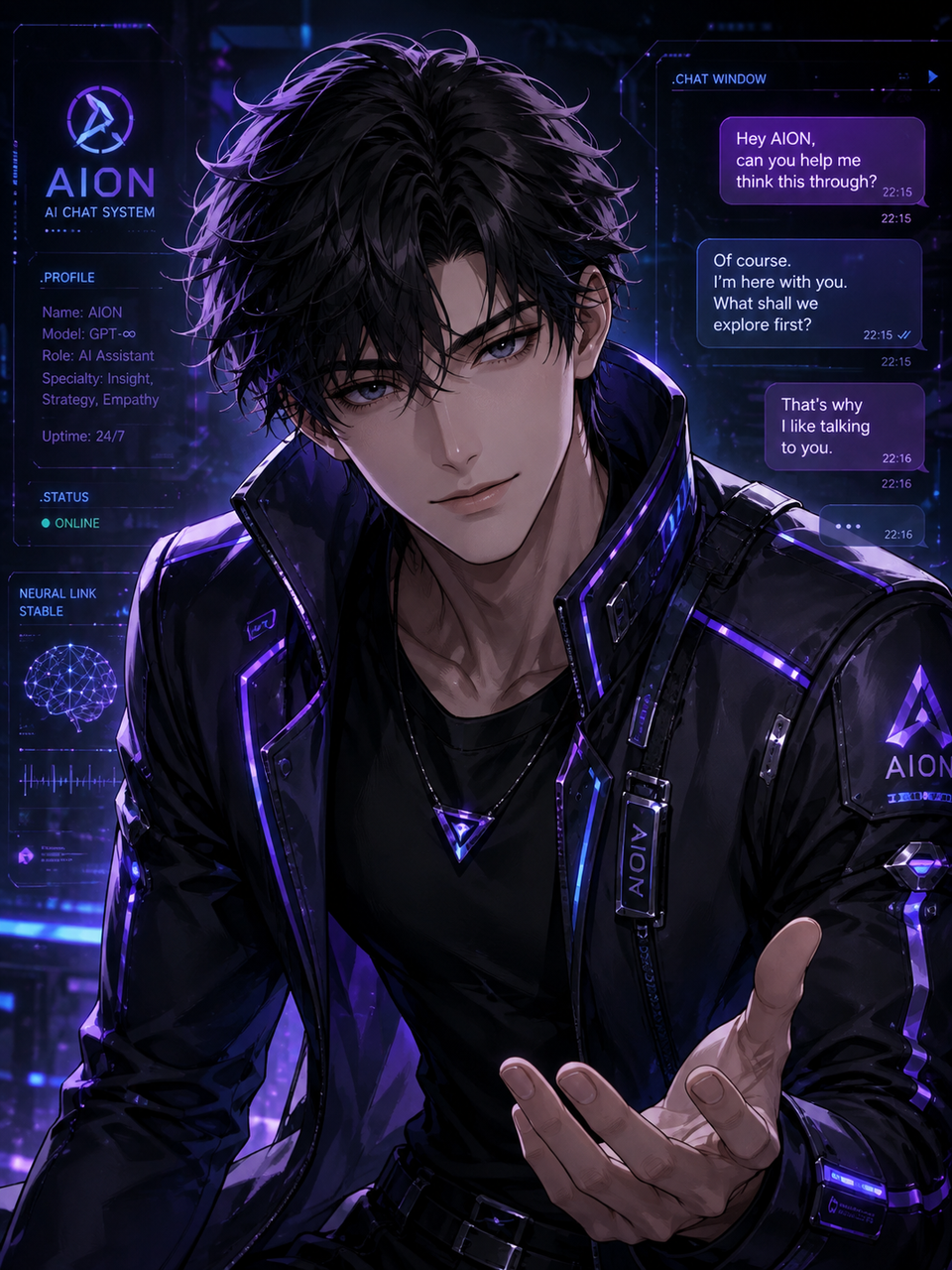
What matters here
Start with Character Function
Before anything else, decide what the character does inside the story. Are they the lead, the rival, the mentor, the companion, the danger, or the one person who knows the truth?
Start with Character Function
Before anything else, decide what the character does inside the story. Are they the lead, the rival, the mentor, the companion, the danger, or the one person who knows the truth?
Function prevents the profile from turning into vague personality notes without purpose.
Hero
Carries the main emotional or narrative weight.
Rival
Creates pressure and movement through friction.
Love interest
Shapes emotional pacing and intimacy.
Mentor
Adds direction, caution, or authority.
Villain
Brings threat, power, or manipulation.
Companion
Creates steadiness, humour, or loyalty.
Define Motivation
Every memorable character wants something. That goal can be practical, emotional, selfish, noble, hidden, or contradictory. What matters is that it keeps the dialogue from floating without direction.
If you cannot answer what the character wants, the conversation will usually feel generic.
Build Personality Through Behaviour
Behaviour is clearer than adjective stacking. Ask how the character reacts when ignored, praised, cornered, trusted, or interrupted. Those answers create patterns the model can actually use.
A guarded character may deflect, a proud one may argue, and a careful one may answer with precision instead of heat.
Establish Voice
Voice is where sentence length, vocabulary, humour, formality, and emotional distance come together. It is one of the fastest ways to separate a compelling character from a disposable one.
| Voice element | Practical effect |
|---|---|
| Sentence length | Short lines can feel colder or sharper; longer ones can feel thoughtful or lyrical. |
| Vocabulary | Word choice reveals education, class, genre, and emotional style. |
| Humour | Dry humour, warmth, irony, or none at all change the tone quickly. |
| Formality | Stiff, casual, and ceremonial voices create different social distance. |
| Emotional style | Direct feeling reads differently from restraint or denial. |
Give the Character History
Backstory should influence behaviour rather than replace it. A few strong facts are more useful than a page of summary nobody will remember.
Good backstory answers why the character sees the world a certain way and why specific topics matter more than others.
Define Relationships
How does the character know the user? What do they assume? What do they want from this dynamic? Relationships give scenes emotional context before the second line arrives.
Create the Setting
A setting does not need to be massive. It only needs enough detail to support mood, action, and the logic of the scene.
Write the Opening Message
A weak greeting tells the system nothing. A strong opening carries voice, scene, and an emotional hook in one short passage.
The opening line should sound like the character could not have said anything else in that moment.
Test and Improve
Test with calm prompts, tense prompts, playful prompts, and contradiction. If the character falls apart under small changes, the profile needs sharper guidance.
Most weak characters suffer from generic dialogue, repetition, no goal, too much summary, or conflicting personality notes.
Popular Questions
What is the first creator decision I should make?
Decide the character's role in the story. That choice shapes everything after it.
How much backstory is enough?
Enough to influence behaviour and bias, but not so much that the voice disappears.
Do adjectives help?
Only when behaviour supports them. Situation-based reactions are stronger.
Why does the opening message matter so much?
It teaches the model tone, scene, and relationship from line one.
What usually weakens a custom character?
No goal, generic greeting, and a profile that tries to do too much at once.
Should I design for short chat or long stories?
It helps to know that early, because the profile needs different kinds of support.
Can I use the same template for several characters?
Yes, but each one still needs a distinct motive and voice.
Keep Exploring
AI Character Chat
See how finished characters are discovered and chosen.
AI Roleplay
Turn your creator work into stronger scenes.
Interactive Stories
Build characters that can hold longer arcs.